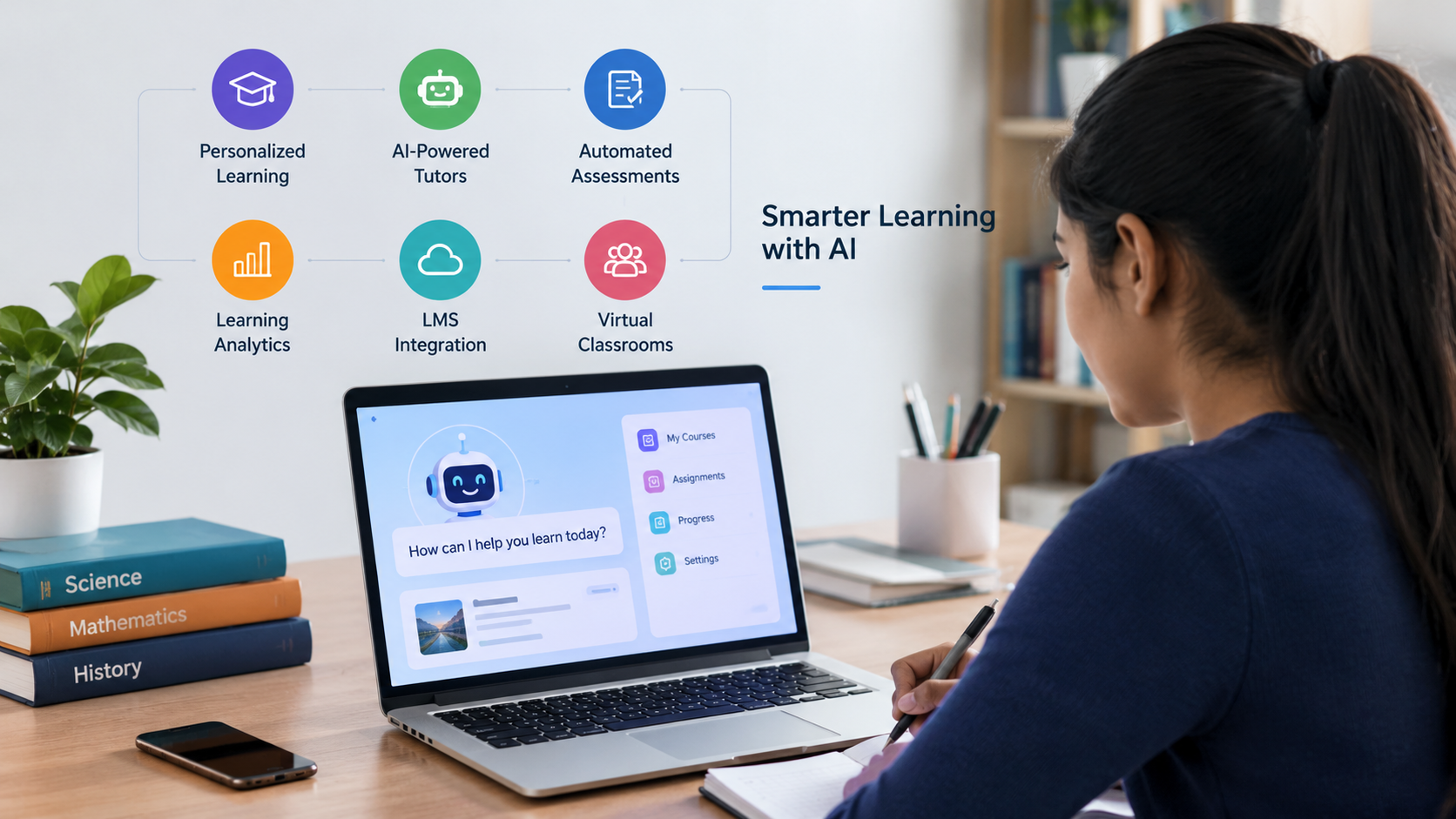
Artificial intelligence is creating new opportunities in the education technology industry, changing how students access educational resources, educators deliver instruction and institutions manage digital learning environments. Developer Bazaar Technologies is highlighting AI-powered education app development solutions in response to the growing demand for personalized, interactive and technology-driven learning experiences.
AI Is Transforming Digital Learning Experiences
Digital education has moved beyond traditional online lessons and recorded lectures. Students increasingly expect learning platforms to adapt to their individual needs, while educators and institutions look for practical ways to improve engagement, track progress and manage educational content.
Artificial intelligence is helping address these requirements through features such as personalized learning recommendations, automated assessments, intelligent tutoring and learning analytics. These capabilities can help education platforms provide more relevant learning experiences while giving educators better insight into student performance.
Developer Bazaar Technologies Introduces AI-Focused Education App Development Solutions
Developer Bazaar Technologies provides an education app development service for organizations looking to build digital learning products. Its work covers different educational models, including eLearning platforms, learning management systems, virtual classrooms and mobile learning applications.
The company’s approach considers how intelligent features can support the complete learning journey. Depending on project requirements, an education application may include AI-powered content recommendations, automated question generation, conversational learning assistants and tools that help learners identify areas where they need additional support.
The objective is to make educational applications more responsive to learner needs while helping educational organizations manage and deliver digital learning experiences.
Key Features of AI-Powered Education Applications
AI-powered education platforms can combine several capabilities to support students, teachers and administrators.
Personalized Learning Recommendations: AI can analyze learning activity and performance patterns to suggest relevant lessons, exercises and educational resources.
Intelligent Tutoring Assistants: AI-based assistants can respond to learner questions, explain concepts and provide additional guidance outside scheduled classroom sessions.
Automated Assessments: Applications can use AI to support quiz generation, answer evaluation and feedback, helping educators manage routine assessment activities.
Learning Analytics: Performance dashboards can help educators identify learning patterns, monitor progress and recognize topics where students may need further attention.
AI-Powered Content Discovery: Intelligent search and recommendation features can help users find relevant courses, lessons and study materials more efficiently.
Virtual Classroom Integration: Education applications can connect learning management features with online classrooms, communication tools and collaborative learning environments.
The selection of features depends on the educational model, target audience and intended application requirements.
Technologies Supporting AI-Based Education Platforms
Developing an AI-powered education application involves more than integrating an artificial intelligence model. The underlying platform must support reliable performance, content management, user access and integration with existing education systems.
Depending on project requirements, development may involve AI and machine learning models, cloud infrastructure, mobile technologies, application programming interfaces and learning management standards. Integrations with platforms such as Moodle, Canvas and other education systems can also help institutions connect new applications with their existing digital learning environments.
A suitable technology architecture allows an education platform to accommodate new features, support different user roles and scale as usage grows.
Data Privacy and Responsible AI in Digital Education
Education applications often handle student profiles, academic records, assessment results and other sensitive information. Protecting this data is an important consideration when introducing AI capabilities.
An experienced education app development company considers secure data handling, access controls, encryption, appropriate data retention practices and transparency around AI-generated recommendations during the development process. Applications serving children or educational institutions must also account for applicable privacy requirements and accessibility standards.
Responsible implementation helps ensure that AI supports educational activities without replacing the role of educators or compromising learner privacy.
The Future of AI-Powered Education App Development
AI is expected to play an increasingly important role in digital education. Advances in generative AI, adaptive learning systems and conversational interfaces are creating new possibilities for interactive and personalized learning applications.
However, successful education technology depends on more than adopting new tools. Applications must address real learning challenges, remain accessible to their intended users and provide practical value to educators and institutions.
As educational organizations continue to explore digital learning models, AI-powered applications are likely to become an important part of how educational content is delivered, managed and experienced.
About Developer Bazaar Technologies:
Developer Bazaar Technologies is a technology company that develops digital solutions for businesses and organizations across different industries. Its education technology work includes eLearning applications, learning management systems, virtual classroom platforms and mobile learning solutions.
The company focuses on building education applications around project requirements, user needs and the technical capabilities required to support modern digital learning environments.